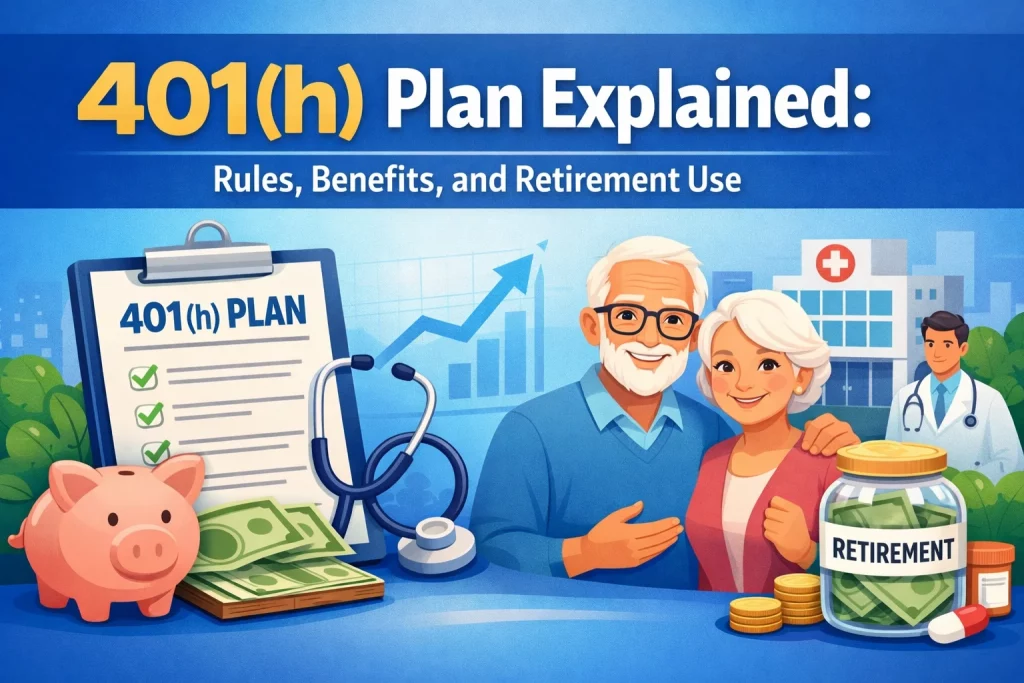
A 401(h) retirement plan allows medical benefits for retired employees using pension trust assets when certain conditions are met. These benefits include payments for sickness, accidents, hospitalization, and medical expenses for retirees and dependents. Federal law created this mechanism because pension plans normally cannot provide medical benefits without losing qualified status. Congress added this exception so employers could fund healthcare benefits without violating plan qualification rules.
This blog will explain how 401(k) plans work, eligibility coverage, and compliance rules, so you understand planning decisions, tax positioning, and benefit access before implementation or review.
What Is a 401(h) Plan?
A 401(h) plan is a medical benefit account within a pension or annuity plan. It pays healthcare costs for retired workers, spouses, and dependents once retirement eligibility exists.
Medical benefits count as secondary benefits within the pension structure. Pension funding must remain the primary purpose of the plan.
Basic characteristics define 401(h) plans:
- The account exists inside a qualified pension.
- Medical benefits appear clearly in plan documents.
- Payments follow defined calculation rules.
- Benefits apply only after retirement.
- A plan cannot favor highly paid employees.
Employers sometimes combine 401(h) plans with VEBA funding to expand deduction capacity.
Example to Understand 401(h) retirement planA 401(h) retirement plan is not a separate retirement account you open yourself. It is a medical benefits account built inside an employer’s pension plan. Employers put money into it while you are working. After you retire, that money pays approved medical expenses like hospital bills or treatment costs.
|
That structure aligns with rules because the account exists inside the pension trust and serves retired workers.
You should often coordinate design with tax preparation for business teams to maintain reporting accuracy.
Explore Other Retirement Options: Choosing Your Retirement Path: Comparing 401(k), Roth 401(k), and Roth IRA Accounts
How a 401(h) Plan Works?
The operation of 401(h) plans depends on tracking contributions and payments correctly. Regulations require keeping a separate accounting record for medical funding.
This separation supports recordkeeping only. Funds do not need separate investments within the trust.
Core Workflow
- The employer contributes money to the pension trust.
- The employer identifies the portion for medical funding.
- Separate records track that portion.
- Trust pays approved retiree medical expenses.
- Remaining funds return to the employer after liabilities end.
Rules prohibit using account assets for unrelated benefits. Violating this condition invalidates plan qualification.
Who Can Offer a 401(h) Plan?
Only employers maintaining pension or annuity plans can establish a 401(h) plan. Profit-sharing plans cannot include this structure.
Federal rules allow medical benefits from 401(h) plans to cover:
- Retired employees
- Their spouses
- Their dependents
Coverage begins only after retirement eligibility is met and employment ends. Employees who remain employed do not qualify, even if they meet age requirements.
Funding sources vary. Contributions can come from employers alone or from both employers and employees.
Are You Ready for Retirement? From Milestones to Savings Goals, Let’s Plan Your Future!
How Examiners Identify Plans
Agents reviewing plan filings examine documentation and Form 5500 entries to identify medical account features. They also inspect ledger records showing separate retiree health accounts.
Employers preparing filings often consult Houston CPA Firm professionals when addressing compliance.
Key 401(h) Regulations You Should Know
Compliance with 401(h) regulations determines whether the plan keeps qualified status.
- Subordination Limitation: Medical contributions must stay below 25% of cumulative plan contributions, excluding past service credits.
- Separate Account Requirement: Plans must maintain accounting separation for medical funding. This separation ensures traceability during review.
- Reasonable and Ascertainable Benefits: Plans must specify payment amounts and time periods. Employer discretion over payment timing violates requirements.
- No Diversion Rule: Funds must pay medical benefits only. Remaining balances return to employers after obligations end.
- Key Employee Accounts: Separate records must track benefits for key employees receiving coverage.
Tax Benefits of a 401(h) Retirement Plan
Tax treatment drives employer interest in 401(h) retirement plan use. Employer contributions to qualified retirement plans receive deduction treatment within allowed limits.
Investment gains and deferred contributions remain untaxed until distribution under retirement plan rules.
These mechanics influence financial planning because:
- Prefunding offsets balance sheet liabilities.
- Trust assets remain protected from creditors.
- Prefunding supports predictable expense timing.
Accounting standards requiring recognition of post-retirement benefit costs increased interest in prefunding structures like 401(h) plans.
Companies evaluating 401(h) retirement adoption often coordinate with tax preparation for business professionals to manage federal income tax reporting positions.
How 401(h) Plans Support Retirement Healthcare Costs
Healthcare expenses continue after employment ends. Employers must plan for those costs. A 401(h) retirement plan allows employers to set aside funds before expenses occur and pay approved claims from the trust.
Using 401(h) plans helps financial planning because assets remain reserved for retiree medical benefits. Trust funding also protects assets from employer creditors. Employers often prefund benefits while employees are still working.
Practical Effects Seen in Real Employers
- Balance sheets reflect lower unfunded benefit exposure.
- Actuaries gain clearer contribution modeling inputs.
- Retirees receive stronger payment reliability.
These results appear in organizations subject to accounting rules requiring recognition of future post-retirement benefit costs while employees still work.
| Example:
An employer expects $2 million in future retiree medical costs. Paying expenses when bills arrive causes uneven spending. Funding 401(h) plans allows contributions over time and payment from trust assets when expenses occur. |
Why Choose Hopkins CPA Firm to Help With a 401(h) Plan
Hopkins CPA Firm is the best choice for structuring compliant 401(h) plans because our team includes former IRS agents, CPAs, attorneys, and advisors with 120+ years of combined experience resolving complex tax issues.
We help you
- Design a compliant 401(h) retirement plan structure aligned with tax law.
- Validate deductions and contribution positioning.
- Build audit-ready documentation and records.
- Negotiate with tax authorities when needed.
- Deliver customized tax strategies year-round.
Local employers trust our Houston CPA Firm advisory teams when handling reporting and tax preparation for business compliance tasks.
Book a consultation today and secure expert guidance now.
Common Mistakes Employers Make With 401(h) Plans
Most 401(h) plan problems stem from a misunderstanding of cumulative testing or documentation wording.
Frequent Compliance Failures
- Miscalculating the contribution percentage limits.
- Using incorrect establishment dates.
- Failing to maintain separate account records.
- Allowing flexible payment decisions.
- Ignoring coordination with other funding sources.
Using an incorrect establishment date changes contribution eligibility. Incorrect establishment dates change contribution testing results and cause failures.
Is a 401(h) Plan Right for Your Retirement Strategy?
A 401(h) plan works best when an employer already runs a defined benefit pension and expects ongoing retiree medical costs. It allows structured funding, tax-deductible contributions, and controlled payment handling inside a 401(h) retirement plan.
A 401(h) retirement plan does not fit businesses using only profit-sharing plans because regulations prohibit adding medical accounts there.
Employers often compare alternatives such as VEBA trusts. Combining VEBA funding with 401(h) plans sometimes increases allowable deductions beyond individual structures.
Audit-Proof 401(h) Plans with Hopkins CPA Firm
Ignoring 401(h) plans creates compliance risk, lost deductions, and funding errors that regulators flag during review. One incorrect calculation inside a 401(h) retirement plan can damage plan qualification and trigger tax exposure that spreads across reporting years. Hopkins CPA Firm fixes these issues with structuring compliant 401(h) plan documentation, validating contribution limits, correcting reporting positions, and aligning filings with 401(h) regulations before problems escalate.
Contact us today and let Hopkins CPA Firm handle plan setup, compliance reviews, deduction alignment, and audit-ready documentation for your 401(h) retirement strategy.
FAQs
A 401(h) plan funds retiree medical expenses through a defined benefit pension trust and pays only qualified healthcare costs after retirement eligibility begins. A 401(k) defers employee wages for retirement savings. 401(h) plans follow contribution subordination limits and separate accounting rules, absent in 401(k) structures.
401(h) regulations require medical contributions to stay below 25% of cumulative pension contributions, maintain separate accounting records, define benefit amounts, restrict asset use solely to medical payments, and return unused balances to employers after liabilities end. Violating these rules disqualifies the underlying pension trust.
Yes. A 401(h) retirement plan allows employer-only funding or shared employer-employee contributions, depending on plan design. Contributions must be clearly designated when made and tracked in separate accounts. Funding structure does not affect eligibility requirements, nondiscrimination testing, or the cumulative subordination contribution threshold applied to 401(h) plans.
401(h) plans pay expenses for sickness treatment, hospital services, accidents, and other medical costs covering retired employees, spouses, and dependents. Payments must follow plan-defined formulas and cannot include unrelated benefits. Coverage applies only after retirement eligibility and separation from employment under 401(h) retirement rules.
Yes. Tax treatment depends on the distribution structure within a 401(h) retirement plan. Employer contributions remain deductible when funded, and investment growth is deferred. Payments covering medical expenses follow retirement plan distribution rules, and reporting obligations apply when benefits are issued from qualified 401(h) plan accounts.